

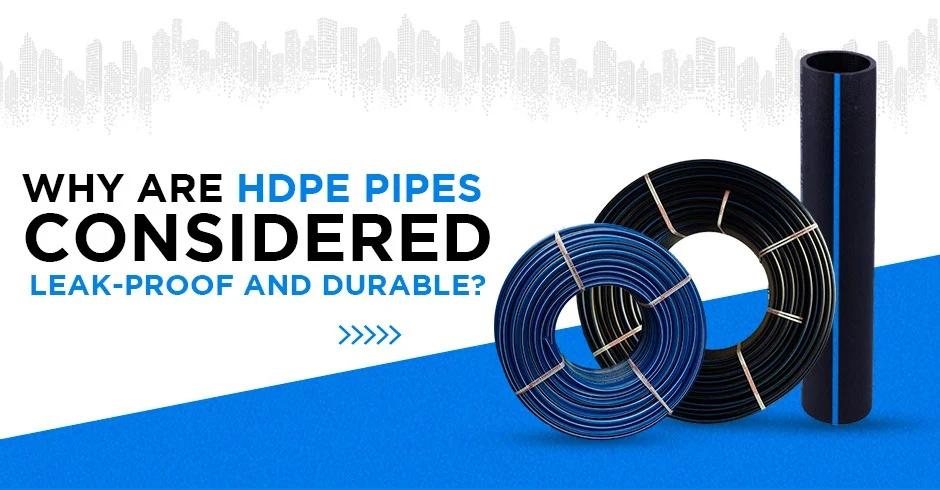
From sewage and water supply to industrial use HDPE (High-Density Polyethene) pipes have revolutionised the modern piping system across sectors. HDPE pipe, known for its exceptional durability and leak-proof performance, is replacing traditional materials like concrete, PVC, and steel. But what makes these pipes so long-lasting and durable?
This blog will explore the engineering of HDPE pipes and the reasons behind their durability and leak-proofness.
What’s HDPE exactly?
High-Density Polyethylene or HDPE is a thermoplastic polymer developed from petroleum. It is known for its resistance to chemicals and corrosion, flexibility, and high strength-to-density ratio. Renowned HDPE pipe suppliers, such as Sudhakar Group, manufacture these pipes through extrusion and provide customisations as well in various wall thicknesses, pressure ratings, and diameters.
What makes HDPE Pipes Leak-Proof?
Whether it is transporting wastewater, or potable water, prevention from leakage is crucial in any sort of piping system. HDPE pipes from an established HDPE pipe manufacturer offer many features that make it virtually leak-proof. Some of those are:
#1. Heat Fusion Welding
HDPE pipes are joined with the help of heat fusion, unlike metal pipes or PVC pipes that depend on mechanical joints. This process melts the HDPE pipe ends and fuses them together, developing a seamless joint.
- Eliminates weak points as well as possible leak paths
- No adhesives or gaskets required
- Joint strength exceeds or equals the pipe
#2. Resilient and Flexible
The flexibility of HDPE lets it absorb pressure fluctuations, ground movement, and vibrations without breaking or cracking. That is particularly useful in areas with unstable oil or seismic zones.
- Best for trenchless installations such as HDD (Horizontal Directional Drilling)
- Avoids leaks caused by settling or shifting
- Lowers joint stress
#3. Chemical and Corrosion Resistance
One of the most compelling arguments for HDPE’s durability is its resistance to corrosion. HDPE pipes from a top-rated HDPE pipe manufacturer are inert, unlike metal pipes that pit, rust, and scale when exposed to corrosive fluids, moisture, or aggressive soils.
No Biological Growth: HDPE pipe’s non-stick, smooth interior doesn’t support biological growth. That helps preserve water quality in potable water systems and maintains optimal flow efficiency during the pipe’s entire lifespan.
Non-corrosive: HDPE pipes from reliable HDPE pipe suppliers will not degrade or rust when exposed to salts, acids, or bases, making them a great choice for wastewater and chemical processing, without requiring cathodic coatings, protection, or any other costly anti-corrosion treatments.
What makes HDPE pipes Durable?
Durability goes beyond the prevention of leaks. It is also about long-standing performance under operational demands, stress, and environmental exposure. HDPE pipe excels in all these areas:
#1. Long Service Life
If bought from a reputable HDPE pipe manufacturer, HDPE pipes can last up to 50-100 years, depending on their installation quality and application. Such longevity lowers replacement expenses as well as environmental impact.
- Sustainable infrastructure cost
- Low maintenance
- Less repairs over time
#2. High Impact Strength
HDPE pipes from trusted HDPE pipe suppliers are capable of withstanding impact from accidental strikes, excavation equipment, and heavy loads without cracking. That is important for industrial zones and urban installations.
- Performs well under extreme temperatures
- Resists mechanical damage
- Suitable for high-traffic regions
#3. Weather and UV Resistance
Modern HDPE pipe is often treated with UV stabilisers and carbon black to resist weathering and sunlight. That makes them ideal for above-ground usages.
- Suitable for mining and agricultural use
- No brittleness from sun exposure
- Maintains strength and flexibility
Economic and Installation Benefits of HDPE Pipes
Durability and leak-proof features offered by leading HDPE pipe suppliers also translate into major economic and installation benefits.
- Installation Efficiency
HDPE’s flexible and lightweight nature streamlines installation and transport. It can be fused into long sections on-site or supplied in long coils for small diameters. That helps lower the need for numerous joints, which helps save on time, materials, and labour. Besides, its flexibility also makes it ideal for trenchless installation techniques, which minimise restoration costs, ground disruption, and excavation.
- Reduced Lifecycle Costs
The fusion of leak-free performance, longevity, and minimal maintenance leads to substantially lower ownership costs. The initial purchase cost of the pipe from the HDPE pipe manufacturer may be higher than the traditional materials; however, the savings over a 50-100 year lifespan make the HDPE pipe an incredible economical solution.
HDPE Pipes- Sustainable Future of Piping
The rise in the use of HDPE pipe is a testament to advanced material science. Its position as a durable and leak-proof solution is secured by molecularly fused joints developed via heat fusion. That helps eliminate the cons of traditional mechanical connections.
For infrastructure planners, engineers, and contractors, HDPE is not just a pipe; it is a long-standing solution to modern-day piping complexities. Reputable HDPE pipe suppliers, such as Sudhakar Group, have set the industry standards by offering top-rated HDPE piping systems that merge sustainability, innovation, and strength.
Our commitment to offering customer-centric piping solutions has helped us become a trusted brand in infrastructure development across India and beyond. So, if you are seeking the best-quality HDPE pipes backed by expert support and proven performance, Sudhakar Group is your go-to HDPE pipe manufacturer.