

Ever wondered why some drainage systems work smoothly for years while others seem to develop leaks, blockages or unpleasant smells? A reliable piping system comes down to three essentials: the right pipes, proper installation, and timely maintenance.
Because SWR pipes are mostly out of sight, small issues can easily go unnoticed until they turn into bigger and more expensive problems. Choosing quality products from reliable plastic pipe manufacturers and following a few simple maintenance practices can help keep your drainage system working as it should.
What Are SWR Pipes Used For?
SWR stands for Soil, Waste and Rainwater. These pipes are used in building drainage systems to carry wastewater and rainwater away safely. Established plastic pipe manufacturers offer SWR pipes in different types and sizes to suit specific drainage requirements.
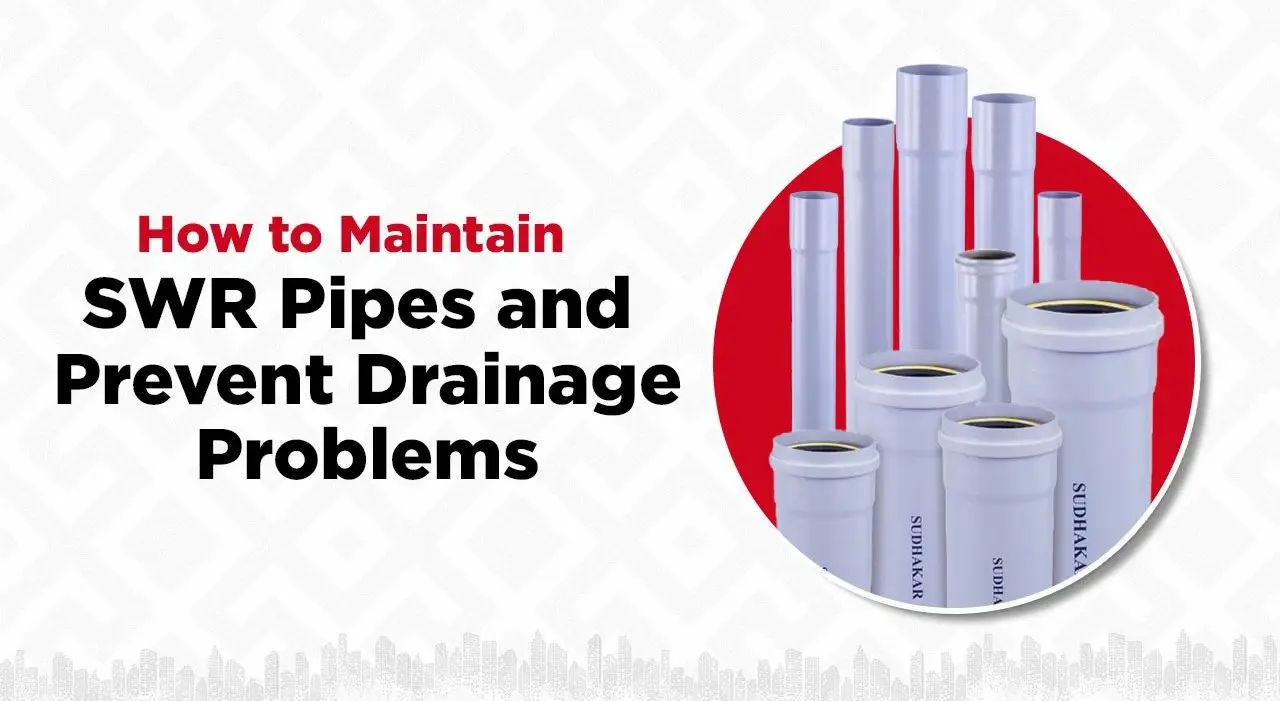
Sudhakar SWR pipes are available in Type A and Type B. Type A pipes are used for non-pressure drainage applications, while Type B pipes are designed to withstand higher structural and external loads.
What Causes SWR Pipe Problems?
Drainage problems do not always start with a faulty pipe. Common causes include:
- Incorrect pipe slope, which can affect the flow of water
- Poorly fitted or damaged joints that may result in leakage
- Excessive weight or physical impact on exposed pipes
- Blockages caused by oil, grease or unsuitable waste
- Damaged supports that allow pipes to bend or sag
- Ignoring small leaks or changes in drainage behaviour
How Can You Maintain SWR Pipes?
SWR pipes generally do not need complicated maintenance. A few simple habits can help you spot potential issues early.
Check exposed pipes occasionally for cracks, bending or damaged supports. Pay attention to joints and look for signs of moisture or leakage, particularly after construction or plumbing work.
It is also important to be careful about what goes down the drain. Avoid disposing of oil, grease and aggressive chemicals through household drains. Where temperature or chemical exposure is a concern, follow the manufacturer’s recommendations for the specific piping system.
If water begins draining more slowly than usual or an unusual smell keeps returning, it is better to investigate the cause rather than wait for a complete blockage.
What Are the Warning Signs of a Drainage Problem?
You usually do not need to be a plumbing expert to notice that something is off. A few signs are easy to spot:
- Slow drainage: Water is taking longer than usual to drain from the sink, bathroom or floor
- Bad odour: An unpleasant smell that keeps coming back can be a sign that something is wrong
- Gurgling sounds: Hearing unusual sounds when water drains may mean there is a blockage or an issue with airflow
- Damp patches: Dampness on a wall or ceiling could indicate a leak in a nearby pipe
- Leaking joints: Even a small leak around a pipe joint should not be ignored
- Frequent blockages: If the same drain keeps getting blocked, it is worth finding out what is causing it
These signs may seem minor at first, but dealing with them early can help prevent more serious drainage problems later.
Why Does Pipe Quality Matter?
Factors such as material quality, dimensions, wall thickness, jointing method and the intended application all need to be considered while choosing a pipe.
This is why it is important to choose products from established plastic pipe manufacturers and uPVC pipe manufacturers that follow relevant quality and manufacturing standards.
The right pipe also needs the right fittings and jointing method. A poorly fitted joint can create problems even when the pipe itself is suitable for the application.
Sudhakar Pipes and Fittings for Reliable Drainage
As one of the uPVC pipe manufacturers offering solutions for different drainage requirements, Sudhakar Pipes and Fittings provides uPVC SWR pipes and fittings for residential, commercial and industrial applications.
The range includes SWR pipes and fittings with rubber-ring and solvent-cement jointing options, giving installers flexibility based on the requirements of the project.
Sudhakar PVC pipes have smooth internal surfaces that support the easy flow of wastewater and rainwater. They are also lightweight, non-corrosive and designed to withstand common environmental conditions, making them suitable for a range of drainage requirements.
What Affects the Price of SWR Pipes?
PVC pipe price can vary based on factors such as diameter, length, pipe type and the jointing system being used. When comparing PVC pipe price, it is also important to consider the product specifications and intended application rather than price alone.
For the latest product information and pricing, contact an authorised dealer or choose products from established plastic pipe manufacturers such as Sudhakar Pipes and Fittings.
Frequently Asked Questions
Can hot water damage SWR pipes?
Very hot water may affect some piping systems. Follow the manufacturer’s recommended temperature limits for the specific pipe.
Should I use drain cleaners in SWR pipes?
Avoid using harsh chemical cleaners unless they are suitable for the piping system. Follow the manufacturer’s recommendations where applicable.
Can tree roots affect underground SWR pipes?
Tree roots can cause problems if they enter through damaged joints or cracks in underground drainage lines.
What should I do if an SWR pipe keeps leaking after repair?
Recurring leakage should be professionally inspected to identify the underlying problem rather than repeatedly repairing the same area.
When should an SWR pipe be replaced instead of repaired?
Replacement may be necessary if the pipe is severely cracked, deformed or damaged beyond repair.