

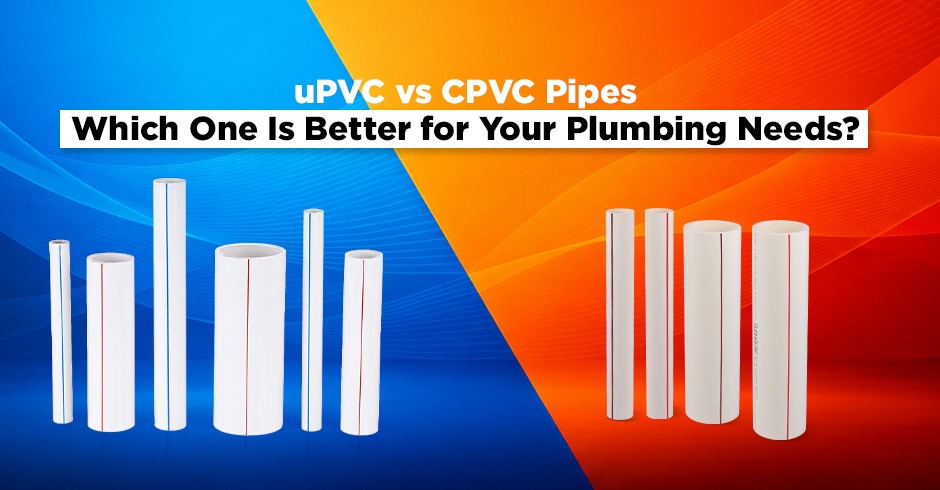
Walk into any hardware shop asking for plumbing pipes, and the shopkeeper’s first question is usually “uPVC or CPVC?” The names may sound similar, but the two pipes are meant for different uses. So, which one should you choose for your home?
Choosing between the two becomes much easier once you know what each pipe is designed to handle. uPVC is commonly used for cold water, drainage and other applications, while CPVC is better suited to hot water. The right choice ultimately depends on where and how the pipes will be used.
uPVC vs CPVC pipes: What Is the Basic Difference?
uPVC stands for unplasticised polyvinyl chloride, a rigid plastic pipe used for cold water, drainage and underground applications. CPVC stands for chlorinated polyvinyl chloride. It is similar to uPVC, but undergoes an additional chlorination process during manufacturing. This gives CPVC greater resistance to heat, making it suitable for hot-water applications.
The biggest difference between uPVC and CPVC is how they handle heat. uPVC is a good choice for cold-water and drainage lines, while CPVC is made to handle hot water. So, when choosing between the two, it really comes down to where the pipe will be used and the kind of water it needs to carry.
Where Should You Use uPVC Pipes?
uPVC plumbing pipes are a practical choice for applications where hot water is not involved. They are commonly used for cold-water supply, drainage and sewage (SWR) systems, underground water lines, agricultural plumbing and borewell connections. They are also resistant to corrosion and many chemicals, making them suitable for a range of indoor and outdoor plumbing needs.
In a typical home, you may find uPVC pipes carrying cold water to taps, connecting an overhead tank, taking wastewater to the drainage system or running underground. If you are comparing the best pipes for plumbing, the key is not to choose one material for everything, but to match the pipe to the job it needs to do.
Where Does CPVC Perform Better Than uPVC?
When hot water is involved, CPVC is generally the better choice. Designed to handle higher temperatures, it is suitable for bathroom geysers, kitchen hot-water lines and other plumbing systems that regularly carry heated water. uPVC plumbing pipes, on the other hand, are better suited to cold-water applications and may not perform as well when exposed to continuous heat.
CPVC is also designed to handle hot water under pressure, making it useful in larger plumbing systems, including multi-storey buildings where hot-water lines run across several floors. In a uPVC vs CPVC pipes comparison, the choice comes down to the application: CPVC for hot-water lines and uPVC for suitable cold-water and drainage applications.
uPVC vs CPVC Pipes: Understanding the Key Differences
| Plumbing Requirement | uPVC Pipes | CPVC Pipes |
| Best suited for | Cold water, drainage, underground lines | Hot water lines, geysers |
| Heat resistance | Suitable for cold water only | Withstands sustained hot water |
| Cost | More economical | Slightly higher due to added processing |
| Chemical resistance | Excellent | Excellent, with added heat stability |
| Common applications | SWR, borewell, agriculture, cold supply | Hot water plumbing, hospitals, hotels |
| UV resistance | Good for outdoor/underground use | Primarily used indoors |
How Do You Choose the Right Pipe for Your Plumbing?
Choosing the right pipe becomes easier when you first think about what the pipe will be used for. In many homes and commercial buildings, both uPVC and CPVC pipes are used for different parts of the plumbing system. uPVC plumbing pipes can be used for cold-water supply, drainage and other suitable applications, while CPVC is used for hot-water lines connected to geysers, bathrooms and kitchens.
So, when comparing uPVC and CPVC pipes, there is no single pipe that is best for every job. The best pipes for plumbing are the ones suited to the temperature, water flow, and application they will be used for.
What Should You Look for in a Reliable Plumbing Pipe?
Material is important, but it is not the only thing that determines how well a pipe performs. The best pipes for plumbing also depend on the quality of the raw material, consistent wall thickness, reliable fittings and proper manufacturing standards. Even a good pipe material may not perform well if the product itself is poorly made.
With over five decades of experience in the pipes and fittings industry, Sudhakar Group manufactures both uPVC and CPVC pipes and fittings for different plumbing needs. The focus is on choosing the right material for the right application rather than using the same pipe everywhere. Whether you need uPVC plumbing pipes for cold-water and drainage lines or CPVC for hot-water plumbing, the Sudhakar team can help you make the right choice.
For guidance on your project, contact info@sudhakarind.com or +91 9705807551.
FAQs
Can CPVC pipes be used for cold water?
Yes, CPVC can be used for cold water, although uPVC is generally a more economical choice for cold-water lines.
Are CPVC and uPVC pipe fittings the same?
No, they use fittings and jointing systems designed for their respective materials.
Which pipe is better for borewell and agricultural use?
uPVC is generally a practical choice because it is strong, economical and suitable for many underground and outdoor applications.
Can uPVC and CPVC pipes be connected?
Yes, they can be connected where needed using a suitable transition fitting; they should not be directly joined using the wrong solvent cement.
Is CPVC safe for drinking water?
CPVC products made and certified for potable-water applications can be used for drinking-water plumbing.