

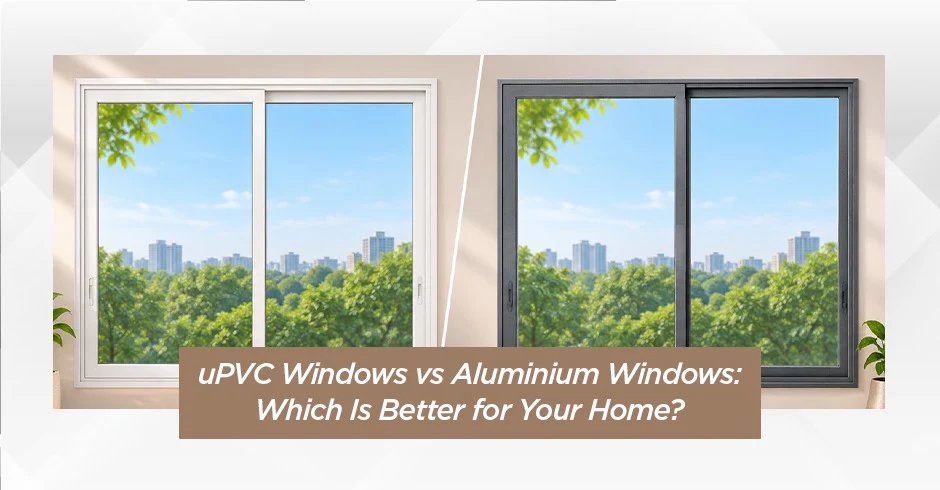
Choosing between uPVC and aluminium windows often comes down to how each room in your home is used. A window facing strong afternoon sun may need different performance from one opening onto a balcony or a noisy road.
Both materials have their strengths. Aluminium doors and windows are known for slim, strong frames that work well with larger glass areas, while uPVC is valued for thermal insulation and low maintenance. The better choice depends on the space, the opening size and what you expect from the window every day.
uPVC vs Aluminium: Key Differences at a Glance
Each material has a clear strength in a different place, and the table shows where uPVC and aluminium doors and windows part ways.
Feature | uPVC | Aluminium |
Frame strength | Frames are usually wider and are reinforced with steel inside | Strong enough for slim frames and large glass panels |
Heat | Poor conductor of heat, so frames stay cooler | Conducts heat more readily; thermal-break systems can improve insulation. |
Noise | Good when the seals and glass are good | Good when the seals and glass are good |
Upkeep | No painting needed | Needs only cleaning when the finish is good |
For both materials, noise reduction depends heavily on the glazing, sealing and quality of installation. Cost is the other point to weigh, and it varies with the finish, the glass and the size, so ask for quotes on both materials for the same rooms.
When Aluminium Doors and Windows Make More Sense
Aluminium is strong for its weight, which is why the frame can stay thin. A thin frame leaves more of the opening to the glass, so a living room gets more light and a wide balcony gets a better view. That makes aluminium particularly well suited to wide sliding doors and larger openings. It also comes in casement and fixed styles, so one material can cover a whole house.
It is not the answer for every room. For rooms that receive strong afternoon sun, compare the thermal performance of the complete window system, including the frame, glazing and sealing. The two can also sit in the same home, each in the place where it works best.
What Makes Premium Aluminium Doors Worth Considering
The word premium is easy to print on a brochure, so test it with your own hands. Four checks at the showroom tell you a lot:
- Slide the door open and shut a few times. It should glide without catching.
- Run a hand along the frame. The finish should feel smooth and even.
- Close the door and lock it. The lock should feel solid, with no wobble.
- Look at the bottom track and ask where rain water goes when it gathers there.
A door is used many times a day, so smooth hardware is what separates premium aluminium doors from basic ones, and it matters more than it does on a window that stays shut for weeks. It also pays to ask for a small sample of the finish and to hold it up in daylight, since a surface that looks even in a shop can look different in the sun.
What to Ask Before Choosing an Aluminium Window Manufacturer
Many aluminium windows manufacturers sell windows that look pretty much the same in a showroom. A few simple questions can help you tell them apart. Which profile system and finish are being used, and what glass options are compatible with it? Who handles installation and after-sales support? What kind of finish protects the surface, and what does it actually protect against?
Good aluminium windows manufacturers answer all three without fuss. If an answer is vague, take it as a sign to ask someone else, and ask to see a finished home if the maker can arrange a visit.
uPVC or Aluminium: What Should You Choose?
Start with the room that worries you most. For heat in an everyday room, uPVC is a good choice. Slim frames, big glass and sliding doors point to aluminium doors and windows as the stronger fit. Many homes use both, so there is no need to pick one for every wall, and the cost, the look and the view from each room can settle the rest.
Explore Sudhakar Profile Systems
Sudhakar FrameX Profile Systems include aluminium doors and windows with EcoX, PrimeX and FX500 series that are designed to withstand extreme weather and are easy to install. Our frames come with surface and colour protection for a smooth finish, and our windows and doors are sound insulated for a quieter, more comfortable home. We also make uPVC windows and doors, in sliding, casement, bay, tilt-and-turn and combination styles across the ECO, PRIMA and ROYAL series. As one of the aluminium windows manufacturers backed by more than 50 years in building products, we can help you match either material to your rooms.
FAQs
Why are aluminium doors and windows used for wide openings?
Aluminium is strong, so the frame can stay slim while the glass panel grows large.
What makes premium aluminium doors different from basic ones?
Premium aluminium doors combine better profiles, hardware, finish, glazing and sealing, giving them smoother operation and a more refined overall build.
Does aluminium rust?
Aluminium does not rust like iron or steel, but its surface can oxidise. A good protective finish helps improve resistance to weathering and corrosion.
Can I use uPVC and aluminium in the same home?
Yes, use each where it suits best, such as uPVC in bedrooms and aluminium on a wide balcony.
Explore our latest Blogs
Smart Reasons to Upgrade to Premium uPVC Windows and Doors for Noise-Free Living